How advances in AI let us rebuild Hatch’s job recommendations around skills, values and interests, with an explanation of why each match could be a good fit.
A peak behind our new AI tech to kick us off the year...
When it comes to AI in the workplace, a lot of the conversation revolves around how it’s going to take people’s jobs. Or at least change them drastically.
As a jobs platform with AI and machine learning at its core, this question is often on my mind and has been front and centre with our #hatchfromscratch rebuild.
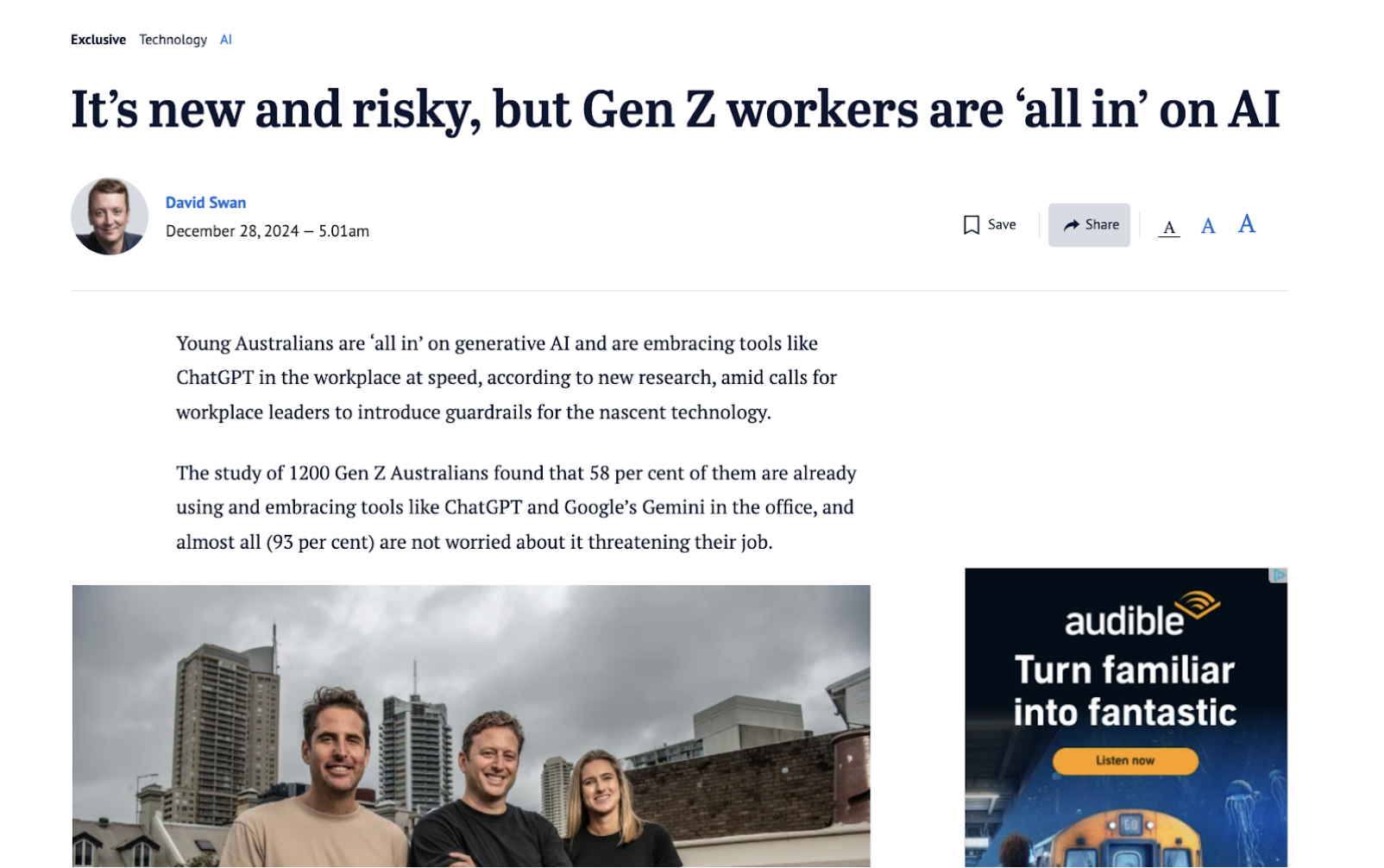
We recently surveyed more than 1,200 Hatch users, featured in the Sydney Morning Herald, and found almost two thirds of young professionals are already using AI tools like ChatGPT to help them at work. This generation isn’t scared of AI.
Our mission at Hatch is for all people to find meaning in work. At its heart, Hatch is a place where jobs and people are recommended to each other, unlocking potential.
The recent seismic advances in AI have allowed us to overhaul our recommendations algorithms and machine learning infrastructure as part of this rebuild, to take a big step towards our mission.
Bringing in Dr Arwen Griffioen last year as our Head of AI & ML is making this possible. She’s been working away for months with the rest of the team to deliver a far superior experience of how people are matched to jobs.
Here are some of the changes we’re making to job recommendations…
Market status quo: Define long lists of keywords and filters – Requires more work from the user to define keywords, preferences, filters
Hatch update: Build your profile or job page – More intuitive way to describe yourself or job and let the AI do the work in finding relevant matches, that you can refine
Market status quo: Rules based matching – Uses set preferences and keywords to return relevant results
Hatch update: Proprietary language model – Learns connections between jobs, skills and values to predict great matches, improving over time with data and usage
Market status quo: More closed to transferable skills – Only find candidates from expected or narrow backgrounds
Hatch update: More open to transferable skills – Discover relevant candidates from all backgrounds
Market status quo: Very little or no cultural/values factors – Ignores a key factor of job fit
Hatch update: Uses cultural/values parameters to show relevant matches – Provides better matches that lead to higher performers
Market status quo: No match explanation – Excludes many candidates, reduces diversity outcomes
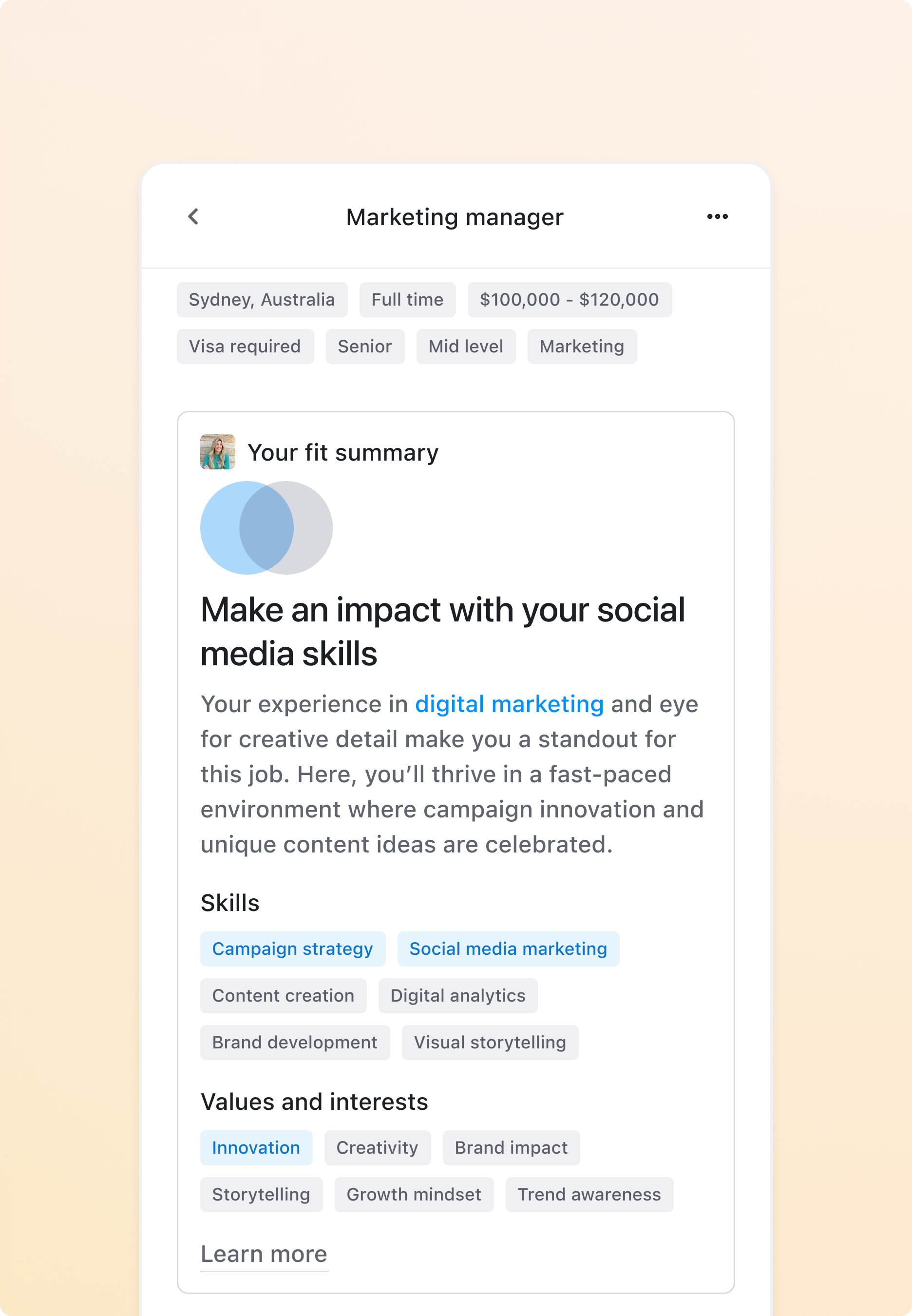
Hatch update: AI generated explanation of fit – Helps candidates understand why they could do this job, improves diversity outcomes
We’re taking an iterative building block approach, starting with the most fundamental job/candidate recommendations, validating, then expanding to more AI applications. It’s going to be a journey and FUN!
Personally I’m most excited for what this means for people using Hatch to find work. The power of a great job is transformative and this will increase people’s chances to find the job that sets them alight.
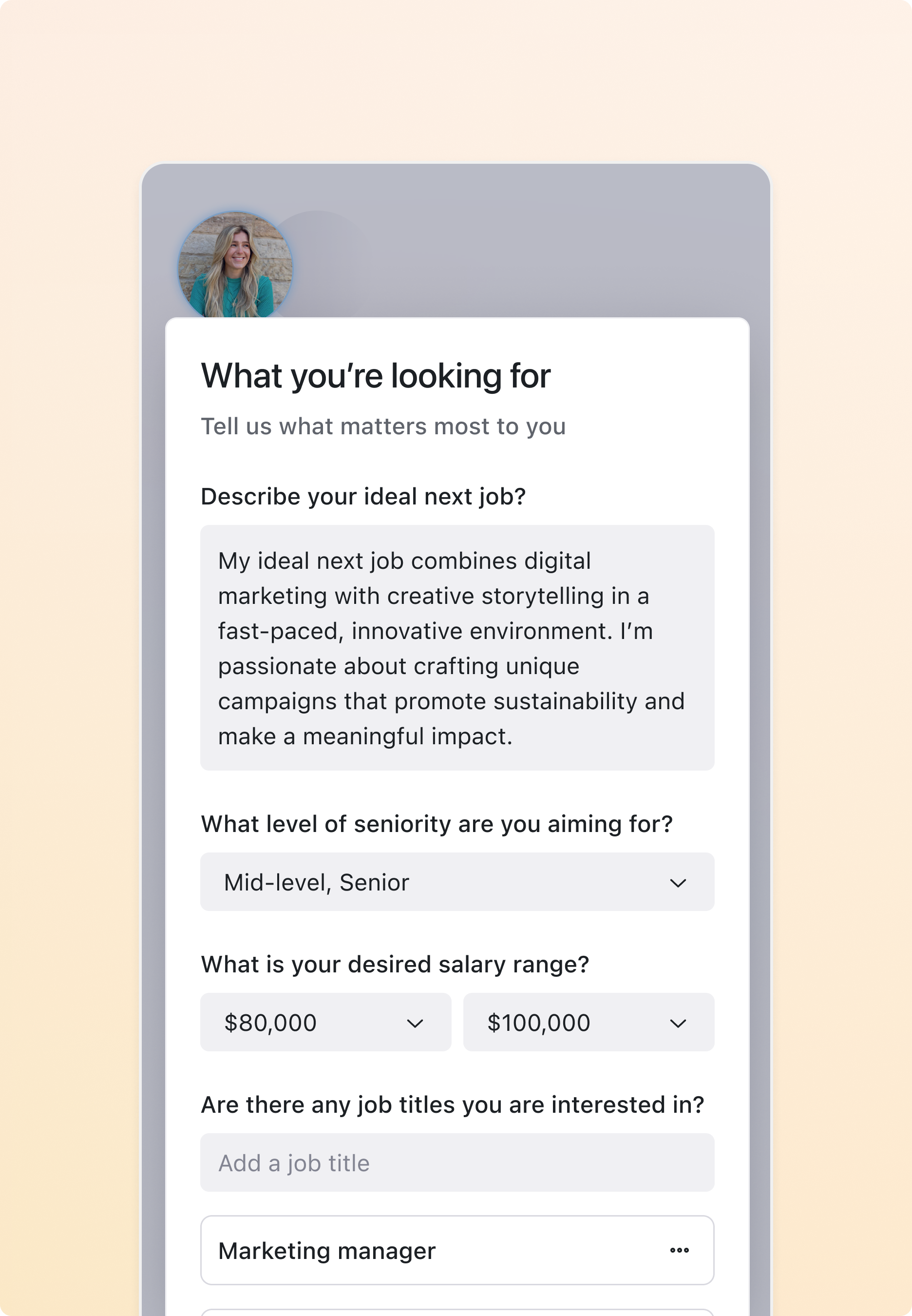
Candidates will be able to write a natural language description of what they’re looking for, and we’ll use advanced models to turn that into a targeted set of recommendations.
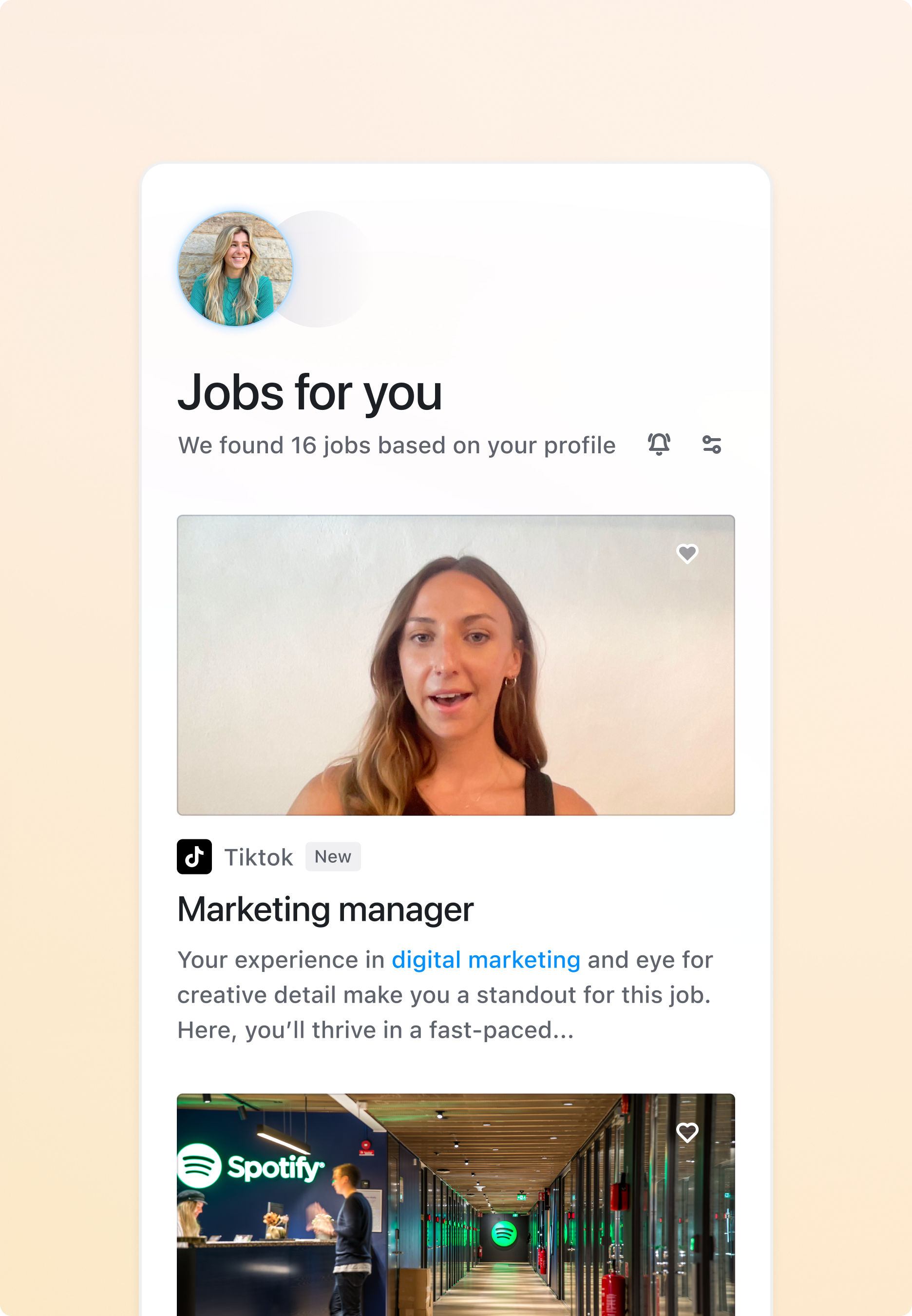
Our lead designer Pete Binns pulled together some screen shots to give you a gist:
1- Candidates can build a profile and describe what they’re looking for

2- Hatch recommends relevant jobs that fit their skills, values, and interests

3- Candidates see a fit summary per job, explaining why this job might be good for them

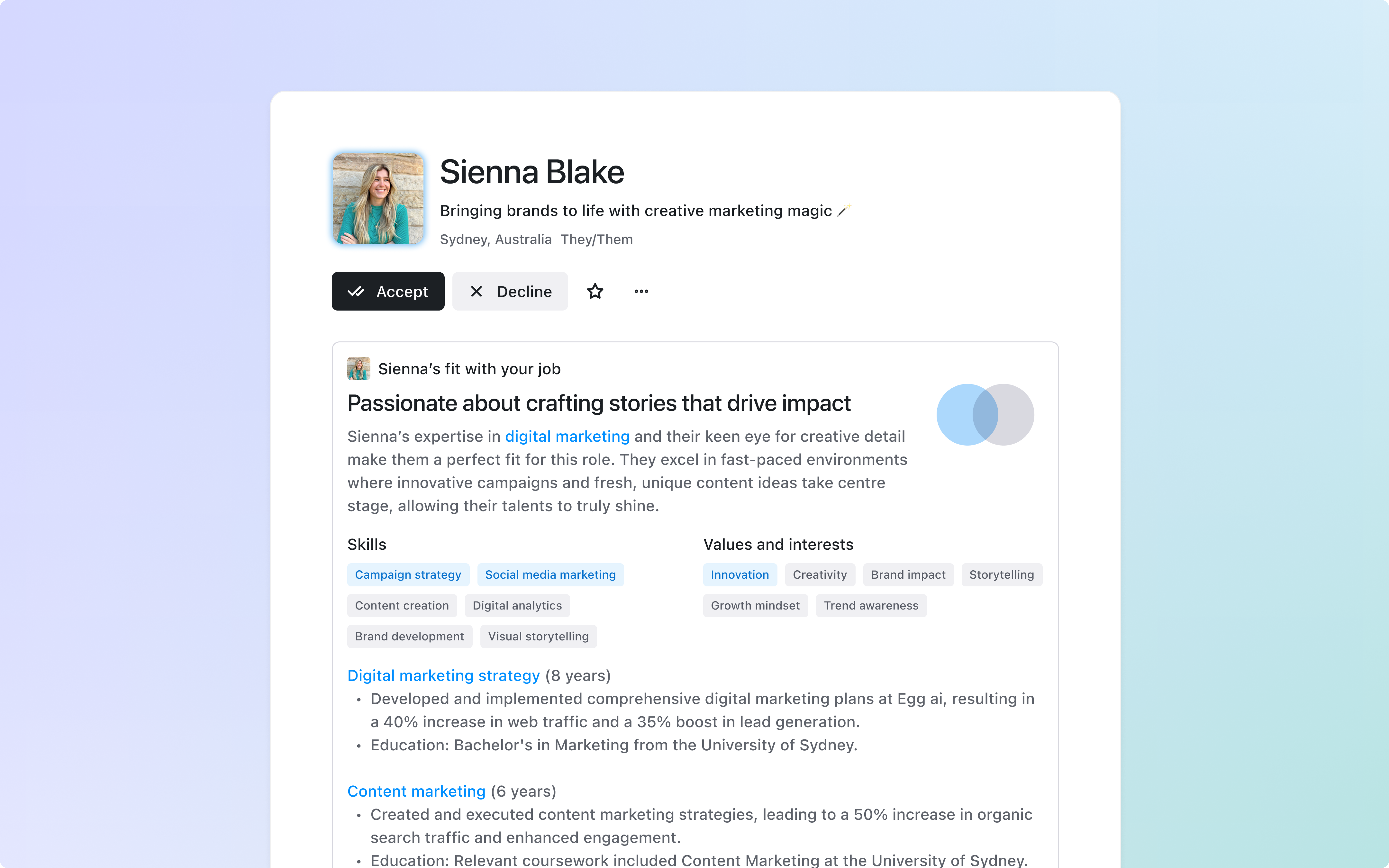
For employers, we will also be providing a fit summary per candidate, explaining in a quick scan why this candidate may or may not fit your job: