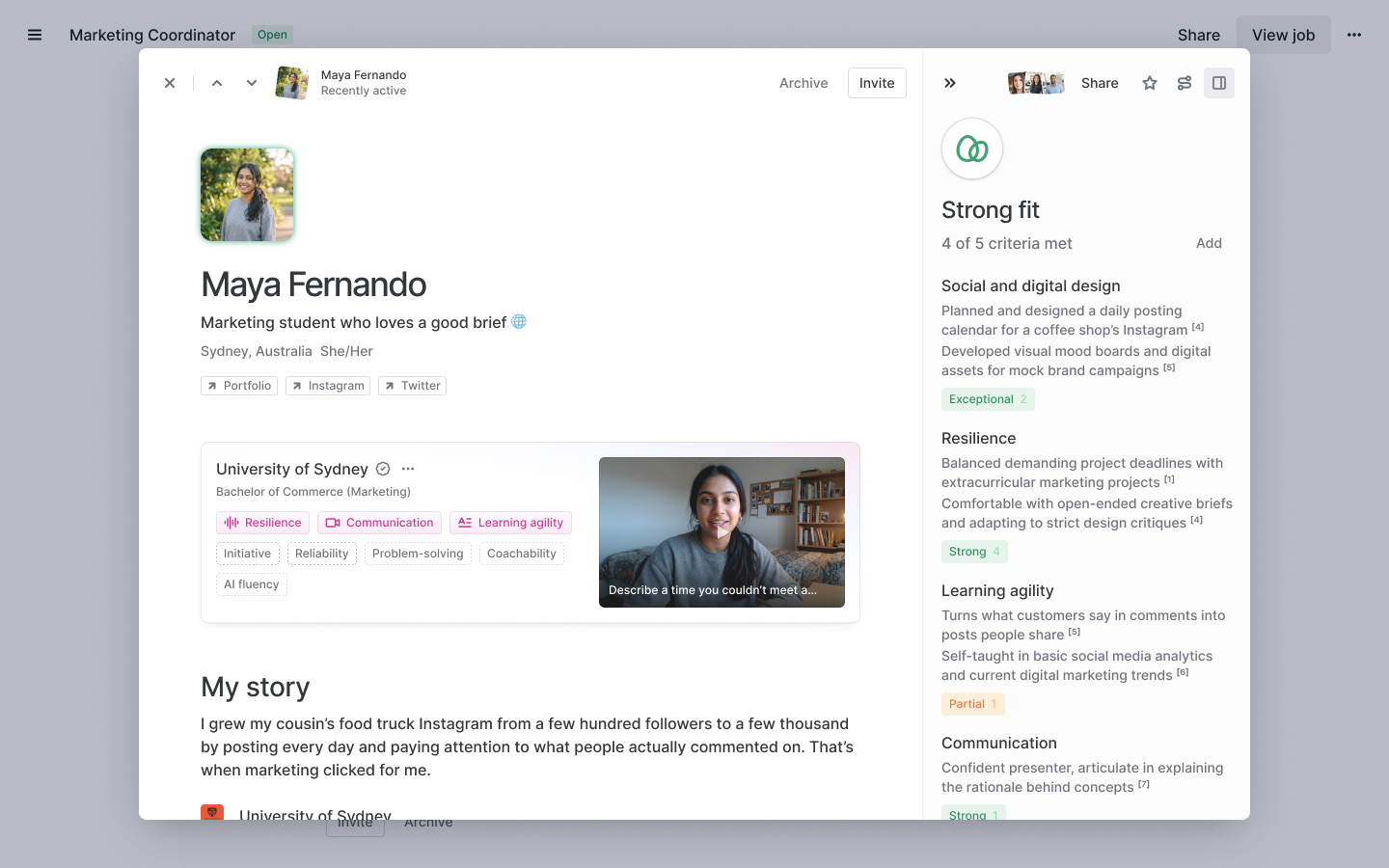
Introducing our next stage: Hatch Students, a national solution we’ve built together with our founding partners, the University of Sydney and Deloitte.
For university students, it's a new way to do meaningful, paid work alongside their degree, at some of Australia's best-known employers. For employers, it's a way to bring capable students, also known as Hatchies, into the team the moment the work shows up.
Our ambition is to give Australia’s 1.5 million+ university students access to meaningful, paid work while they study.
Hatch Students is open to students at any Australian tertiary institution, and we already have students from 44 institutions on Hatch, with thousands placed at major employers.
It’s in pilot now, and next year we'll be formally launching by partnering with a network of leading universities across the country to further deepen employer access to emerging talent.
I genuinely don’t think a multi-university initiative like this has been done in Australia before. It’s certainly the biggest thing we've launched since we started Hatch.
But to explain why it matters so much to us, I need to take you back a bit.
The reason why Chaz and I started Hatch was to help people find meaning in work. We both spent years on the hiring side, me at THE ICONIC and Chaz at Zip. At THE ICONIC, I hired hundreds of young people and kept seeing the same thing: they add so much value as they bring motivation and new skills into your team.
When I think back to my early career, I think about those who were in my corner. One of my first jobs was as a development analyst at a national hotel group. My manager, Lindsay Leeser, taught me that good analysis is as much about listening to people as it is about the numbers, and that judgement brings both together. It’s a lesson I’ve carried into every role since.
That's what a first job does. It teaches you things a lecture never can, and it puts the right people in your corner.
At Hatch, we want all young people, no matter their background, to have access to potential managers and mentors that can change the course of their careers. Over the last nine years, we have built a marketplace of 400,000+ members and moved from a ‘better jobs board’ to a human-centric matching platform. We don't use AI to run a broken process faster; we use it to create deeper understanding of a person or a job and more powerful human connections.
But one thing kept coming up. AI has changed our product, but AI clearly is also reshaping the workforce for young people.
The need for human skills
Since 2023, we have been running an annual survey with young Australians at work. Our 2026 survey showed us that AI is clearly having an impact.
Over 81% of Gen Z are feeling anxious about their career prospects. However, against this backdrop, 84% of Gen Z feel optimistic about their future given the opportunity for faster growth and impact in the age of AI.
So, is AI taking the next generation’s jobs?
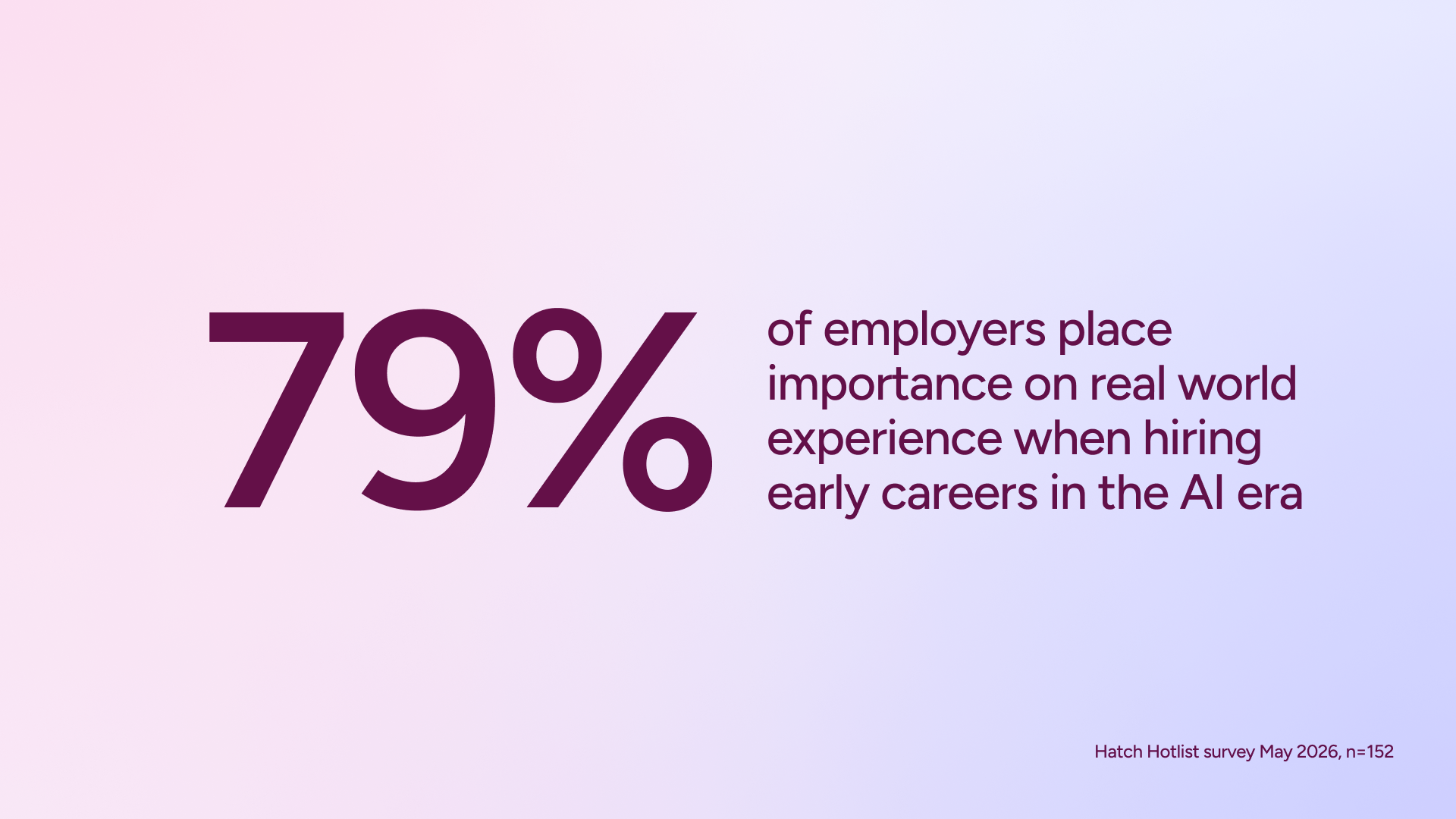
The simple answer is no. What’s changing is that “human skills” matter more than ever to employers. Cited as critical in our research, skills like judgement, communication, teamwork, and adaptability are what make someone effective when paired with AI.
Those skills get developed through real life experiences. Young people know this. They want access to meaningful paid experience alongside their studies to develop these skills.
Today, fewer than 30% of university students gain access to relevant experience during their degree. 625,000 people will commence university in Australia in 2027 and there are just not enough opportunities for them.
If we can’t create this new pathway, Australia will lose AI capability in its next generation. This is a national priority.
We had a working model with students
Working with students has been a core part of how we started this business. We've spent years with major employers, helping them place university students into real, paid jobs, with Hatch as their employer of record.
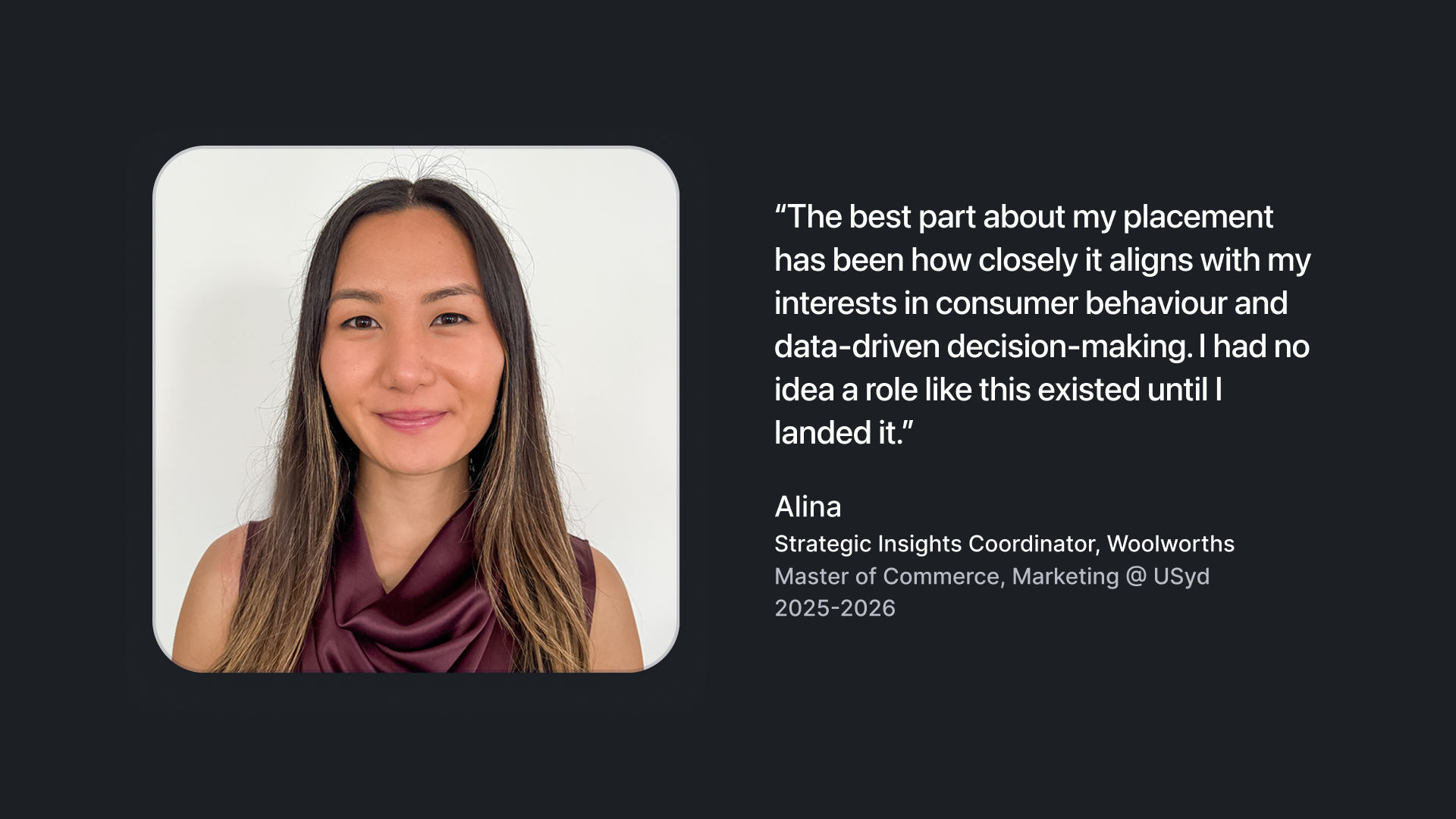
Alina is one of them. Whilst studying a Master of Commerce at the University of Sydney, she put her skills to work at Woolworths, providing research insights, competitor analysis and trend reporting.
The trouble is that stories like Alina’s are still the exception.
About 3,000 students have been Hatchies so far. You can see more than 800 of them here. That’s a drop in the ocean of the 1.5 million+ studying in higher education each year.
To scale, a partnership was needed
We knew we couldn't scale this on our own. Seeing this gap, we partnered with the University of Sydney and Deloitte at the start of the year. The three founding partners had a vision to make a scalable impact.
Our first phase was to lead with the problem and listen. We ran feedback sessions with 25 student society partners and around 2,000 active students, because this had to work for them first.
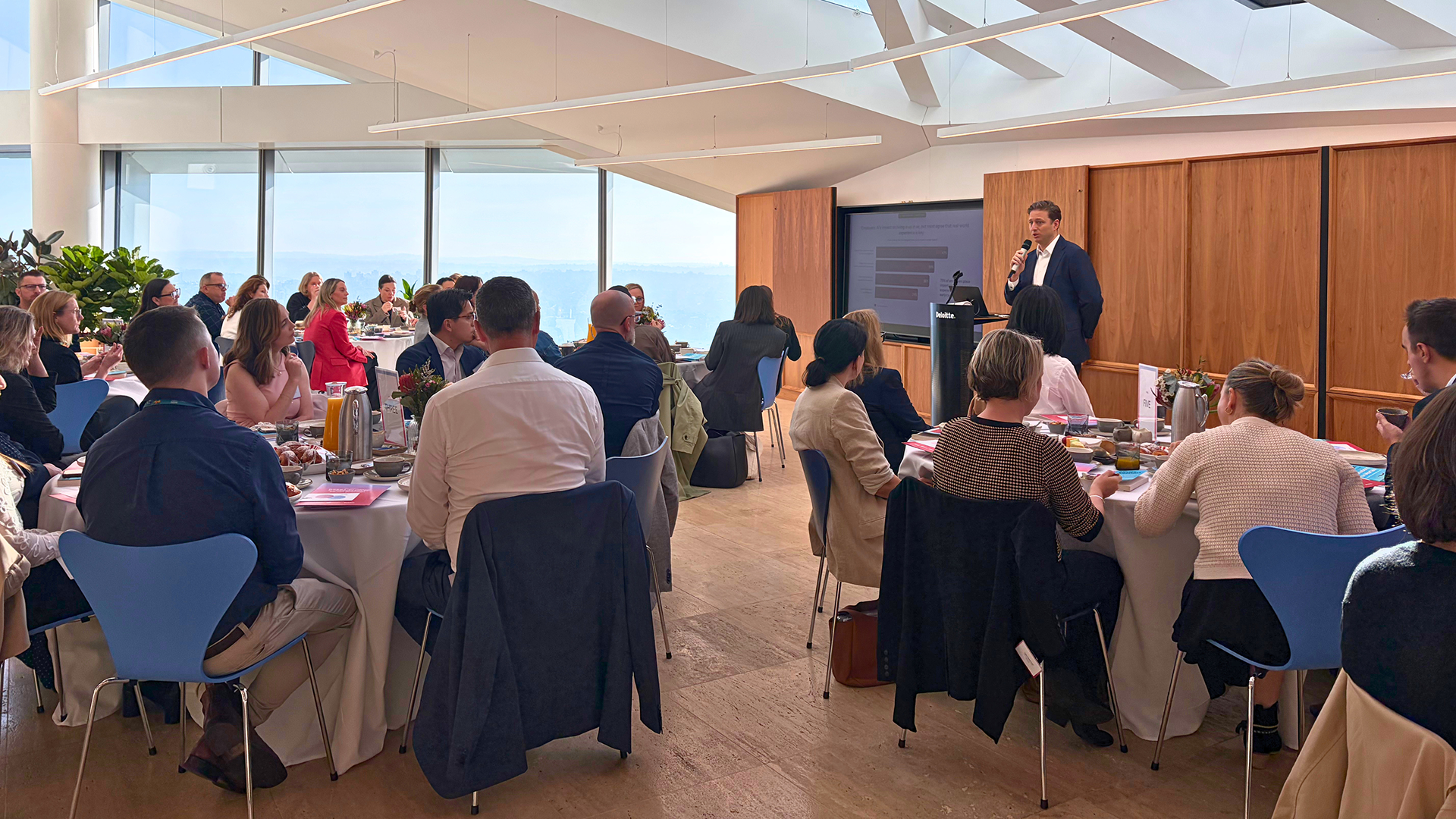
With the University of Sydney, we thought about how we roll out a program to universities all around Australia. With Deloitte, we went out to test with employers. Are employers actually thinking differently about how they build their future talent pipeline? So we hosted roundtables with more than 80 employers and 18 universities.
What we found confirmed our research: the need for junior talent has not disappeared. Early-career talent remains critical to a sustainable workforce pipeline. Young talent helps navigate the change to an AI-led work world and brings new skills and drive.
Yes, pathways exist, and internships and graduate programs are still very important. But they are usually seasonal, rigid, set for 1-2 years and very resource intensive to run. Most businesses can’t take part, and for the ones who can, adapting a rigid model for a skills landscape that is shifting every couple of weeks is very hard.
What employers told us they really need is:
Flexibility. Access to motivated students that moves with real business needs, not a fixed cohort.
Skills over credentials. Hiring for human skills like judgement, critical thinking and adaptability, and an easier way to spot them.
Transparent matching. Clear reasons why a candidate is surfaced, not just a shortlist.
Low lift for hiring managers. A fast, supported way to bring students on, without standing up a mini graduate program.
Work-ready students, with support built in. Students who arrive professionally prepared, backed by coaching and community rather than “onboard and forget”.
With insights from our founding partners, our research with students and testing the needs with employers, we’ve built Hatch Students.
We're launching with a group of flagship employers, including Deloitte, Westpac, Woolworths, Bupa, AGL, RoadTek (Queensland Department of Transport and Main Roads) and Flight Centre Travel Group.
What Hatch Students is designed to do
When there's real work to do that a capable student can do, access to this workforce should be easy and seamless. Because student jobs can be created the moment a need appears, Hatch Students opens up work that would never otherwise become a job for a young person: the project without headcount, the initiative that needs extra hands. This creates more paid opportunities, not more competition for the same few.
For students
Paid work that fits around their degree. Placements flex with their timetable: more hours in the holidays, fewer when exams hit.
Matched on who they are. Their profile captures their skills, values and interests, not just what's on paper.
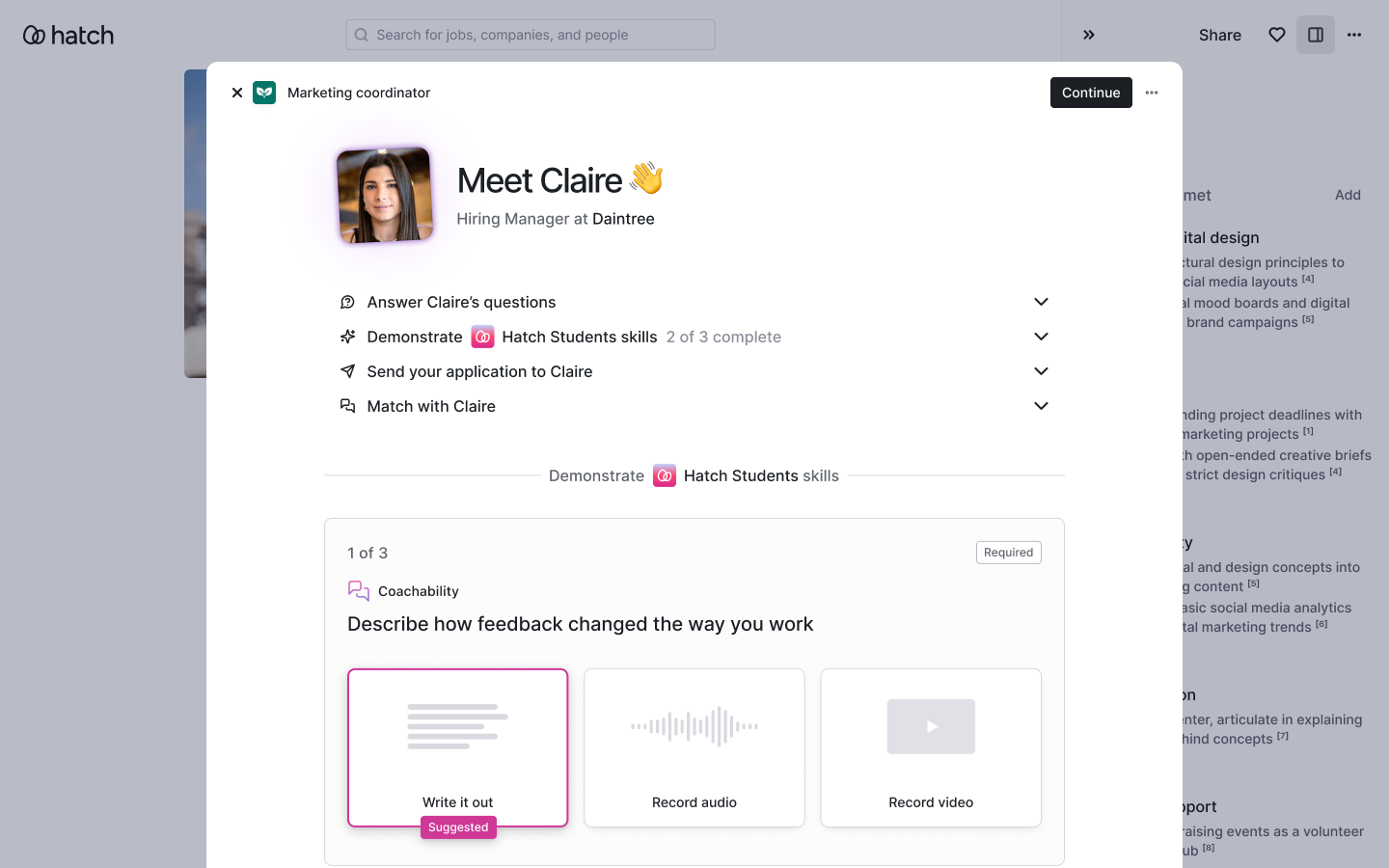
See where they fit before they apply. Every student job is broken down into clear criteria, and we show them how their profile lines up, so they can put their energy where it counts.
Real work at leading employers. They'll contribute to real projects inside real teams.
A head start. Graduate with experience, references, a network and, for many Hatchies, a job offer.
For employers
Help the moment they need it. A project lands, a busy season hits or a new idea just needs a helping hand. Anyone in the team can post a student job, anytime.
Students matched on more than a CV. Our AI looks at video responses, profiles and values to help employers understand why each student could be a fit. The AI is built to bring clarity, but we always leave the hiring decisions to real people.
Flexibility that moves with them. Placements run from 3 to 12 months or more, anywhere between 15 and 40 hours a week.
No headcount, no admin. Hatch is the employer of record and handles payroll, contracts and compliance.
Tomorrow's talent, road-tested. Many employers get value out of Hatchies as a way to feed into their graduate programs.
For universities
A net new market of exclusive paid jobs for their students. Increase the supply of meaningful paid jobs for students through access to jobs that don’t exist elsewhere.
Better visibility to design interventions and support. Track insights into student participation, applications, placements, and outcomes to identify where support can improve results.
Supporting better diversity outcomes. Track and support the successful outcomes of defined equity groups, including gender diversity, First Nations Australians, people with disability, first-in-family and low socio-economic backgrounds, regional students, and international students.
Support the growing demand for Work Integrated Learning placements. Help students source paid placements and earn credit as part of degree requirements, without universities having to source and manage every placement themselves.
Leverage existing industry relationships. Make it easy for existing industry partners of universities to create more job opportunities for their students.
This is just the beginning
My hope is simple. Every student who wants meaningful, paid work before they graduate should be able to get it, and should have their own Lindsay, someone who sees what they're capable of and backs them. We're not there yet, but today is a big step.
Thank you to the University of Sydney, Deloitte, our flagship employers, every Hatchie who has shown what students can do, and the Hatch team who have put so much into this.